Reprogramming Muscle Memory to Teach Correct Leg Compression
John Thornell
by Zohar Ambramovitz, Head Coach, Marina Aquatic Center
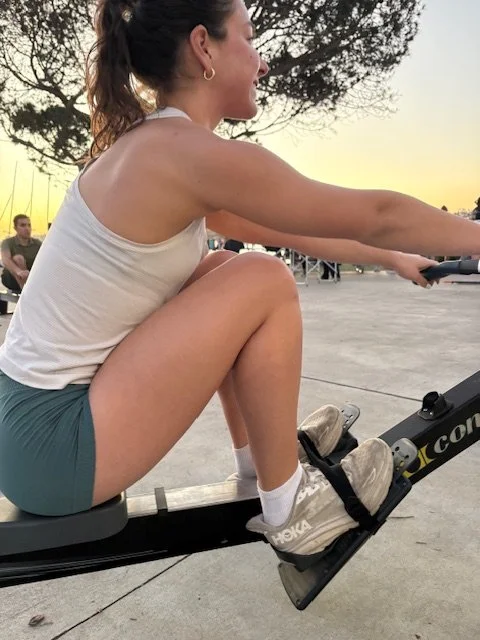
One of the most persistent challenges the MAC Junior Rowing coaching staff has is teaching rowers not to over-compress at the catch. “Several of our 120 high-school rowers tend to tuck their butts at the catch. Some rowers even hit their heels with the erg seat,” explains long-time coach Zohar Abramovitz. “This makes it difficult for them to effectively start the drive.”
Over-compression, or hyperflexion of the legs, at the catch, puts rowers in a weak position at the beginning of the drive. “It takes rowers time to get their heels back down on the footboards, and un-compress to the point where they should start the drive,” adds Abramovitz. Hyperflexion can also lead to knee and back injuries.
MAC coaches tried using different techniques to show rowers where to end the recovery. “We used electrical tape and seat bungees on the erg track to provide a tactile feel,” says Abramovitz. But rowers quickly wore out the tape and easily moved the bungees.
With his father’s expression in mind, ‘If you can think of it, someone else has probably already thought about it, and is making money off it’ Abramovitz found the leg compression guide online and ordered one for each of their 26 ergs at the UCLA boathouse.
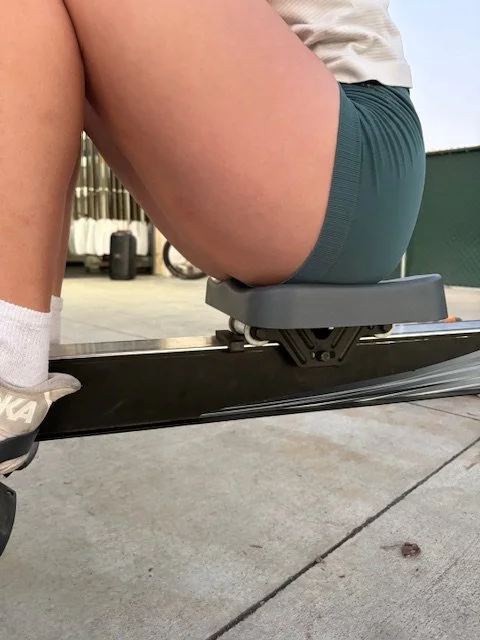
The guides serve as stops for erg-seat wheels and help rowers get their shoulders in front of their hips at the catch. MAC coaches set the guide for athletes. Each rower has their number where they should place the rubber stop. Coaches check in during steady-state pieces to see if the rowers moved the rubber stop off their number.
“We have definitely seen an improvement after using the guides,” says Abramovitz. He doesn’t have hard data on, for example, improved 2k times as a result, but does have what he calls eye-of-the-beholder evidence. “It’s a terrific teaching tool,” he says. “The guides help rowers reprogram muscle memory and put them in a more athletic position at the catch.”